Domination
Differential operators
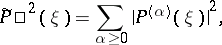
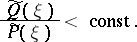
An order relation formulated in terms of the characteristic polynomial  . For example, if
 |
 |
then  is stronger than
  if for any
  ,
,
 |
There also exist other definitions of domination; see [1].
References
| [1] | L. Hörmander, "Linear partial differential operators" , Springer (1963) MR0161012 Zbl 0108.09301 |
Comments
References
| [a1] | L.V. Hörmander, "The analysis of linear partial differential operators" , 2 , Springer (1983) pp. §10.4 MR0717035 MR0705278 Zbl 0521.35002 Zbl 0521.35001 |
Theory of games
A relation expressing the superiority of one object (strategy (in game theory); sharing) over another. Domination of strategies: A strategy  of player
  dominates (strictly dominates) his strategy
  if his pay-off in any situation containing
  is not smaller (is greater) than his pay-off in the situation comprising the same strategies of the other players and the strategy
  . Domination of sharings (in a cooperative game): A sharing
  dominates a sharing
  (denoted by
  ) if there exists a non-empty coalition
  such that
 |
and  for
for  (where
  is the characteristic function of the game).
I.N. Vrublevskaya
Comments
Instead of sharing the terms imputation and pay-off vector are also used (see also Gain function).
References
| [a1] | G. Owen, "Game theory" , Acad. Press (1982) MR0697721 Zbl 0544.90103 |
Potential theory
An order relation  between functions, in particular between potentials of specific classes, i.e. a fulfillment of the inequality
  for all
  in the common domain of definition of
  and
and  . In various domination principles the relation
  is established as the result of the inequality
  on some proper subsets in the domains of definition. The simplest Cartan domination principle is: Let
  be a non-negative superharmonic function (cf. Subharmonic function) on the Euclidean space
  ,
,  , and let
  be the Newton potential of a measure
  of finite energy (cf. Energy of measures). Then, if
  on some set
  such that
  , the domination
  holds. See also Potential theory, abstract.
References
| [1] | M. Brélot, "Eléments de la théorie classique du potentiel" , Sorbonne Univ. Centre Doc. Univ. , Paris (1959) MR0106366 Zbl 0084.30903 |
| [2] | M. Brelot, "On topologies and boundaries in potential theory" , Springer (1971) MR0281940 Zbl 0222.31014 |
E.D. Solomentsev
Further concepts
There are some more concepts in mathematics which involve the word dominant or domination. Thus, a sequence of constants  for a sequence of functions
  such that
  for all
  is called a dominant or majorant of
  .
.
In algebraic geometry one speaks of a dominant morphism  if
if  is dense in
  .
.
In the theory of commutative local rings, if  ,
,  are both local rings contained in a field
  , then
  dominates
  if
if  but
but  , where
  is the maximal ideal of
  .
.
Finally, cf. Representation of a Lie algebra and Representation with a highest weight vector for the notions of a dominant weight and a dominant linear form.
The Cartan domination principle is also called Cartan's maximum principle. Let  be a real-valued function on
  ,
,  for a measure
  on
on  . The kernel
  is said to satisfy the balayage principle, or sweeping-out principle, if for each compact set
  and measure
  supported by
  there is a measure
  supported by
  such that
  quasi-everywhere on
  and
and  in
in  . The measure
  is the balayage of
  ; cf. also Balayage method. Let
  be the support of
  . Then the balayage principle implies the Cartan domination principle in the form that if
  on
on  for some
  of finite energy and some
  , then the same holds in
  . (The measure
  has finite energy if
  is finite.) The potential is said to satisfy the inverse domination principle if
  on
on  for
for  of finite energy and any
  implies the same inequality in
  .
.
In abstract potential theory the Cartan domination principle simplifies to the "axiom of dominationaxiom of domination" . Let  be a locally bounded potential, harmonic on the open set
  , and let
  be a positive hyperharmonic function (cf. Poly-harmonic function). If
  on the complement of
  , then
  . See [a1] for a survey of related properties.
References
| [a1] | C. Constantinescu, A. Cornea, "Potential theory on harmonic spaces" , Springer (1972) MR0419799 Zbl 0248.31011 |
| [a2] | R. Hartshorne, "Algebraic geometry" , Springer (1977) pp. Sect. IV.2 MR0463157 Zbl 0367.14001 |
Domination. Encyclopedia of Mathematics. URL: http://encyclopediaofmath.org/index.php?title=Domination&oldid=37421