Partial differential equations, property C for
Property  stands for "completeness" of the set of products of solutions to homogeneous linear partial differential equations. It was introduced in [a1] and used in [a2], [a3], [a4], [a5], [a6], [a7], [a8], [a9], [a10], [a11], [a12], [a13] as a powerful tool for proving uniqueness results for many multi-dimensional inverse problems, in particular, inverse scattering problems (cf. also Inverse scattering, multi-dimensional case).
Let  be a bounded domain in
  ,
,  , let
, let  , where
  is a multi-index,
  , derivatives being understood in the distributional sense, the
  ,
,  , are certain
  functions,
  is the null-space of the formal differential operator
  , and the equation
  is understood in the distributional sense.
Consider the subsets  and
and  for which the products
  are defined,
  ,
,  .
.
The pair  has property
  if and only if the set
  is total (complete) in
  , (
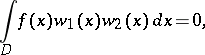
, ( is fixed), that is, if
  and
and
 |
 |
then  .
.
By property  one often means property
  or
or  with any fixed
  .
.
Is property  generic for a pair of formal partial differential operators
  and
and  ?
?
For the operators with constant coefficients, a necessary and sufficient condition is given in [a10] for a pair  to have property
  . For such operators it turns out that property
  is generic and holds or fails to hold simultaneously for all
  : Assume
  . Denote
  ,
,  . Note that
  ,
, 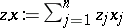 .
.
Therefore  if and only if
  .
.
Define the algebraic varieties (cf. also Algebraic variety)
 |
One says that  is transversal to
  , and writes
  , if and only if there exist a point
  and a point
  such that the tangent space
  to
to  (in
(in  ) at the point
  and the tangent space
  to
to  at the point
  are transversal (cf. Transversality).
The following result is proved in [a1]: The pair  of formal partial differential operators with constant coefficients has property
  if and only if
  .
.
Thus, property  fails to hold for a pair
  of formal differential operators with constant coefficients if and only if the variety
  is a union of parallel hyperplanes in
  .
.
Therefore, property  for partial differential operators with constant coefficients is generic.
If  and the pair
  has property
  , then one says that
  has property
  .
.
Examples.
Let  ,
,  . Then
  . It is easy to check that there are points
  and
and  at which the tangent hyperplanes to
  are not parallel. Thus
  has property
  . This means that the set of products of harmonic functions in a bounded domain
  is complete in
  ,
,  (cf. also Harmonic function). Similarly one checks that the operators
 |
have property  .
.
Numerous applications of property  to inverse problems can be found in [a1].
Property  holds for a pair of Schrödinger operators with potentials
  ,
,  , where
  is the set of
  functions with compact support{} (cf. also Schrödinger equation).
If  ,
,  ,
,  ,
,  ,
,  is the unit sphere in
  , are the scattering solutions corresponding to the Schrödinger operators
  ,
,  ,
,  , then the set of products
  ,
,  is fixed, is complete in
  , where
  is an arbitrary fixed bounded domain [a1]. The set
  , where
  is fixed, is total in the set
  , where
  is the Sobolev space [a1].
References
| [a1] | A.G. Ramm, "Multidimensional inverse scattering problems" , Longman/Wiley (1992) |
| [a2] | A.G. Ramm, "Scattering by obstacles" , Reidel (1986) |
| [a3] | A.G. Ramm, "Completeness of the products of solutions to PDE and uniqueness theorems in inverse scattering" Inverse Probl. , 3 (1987) pp. L77–L82 |
| [a4] | A.G. Ramm, "Multidimensional inverse problems and completeness of the products of solutions to PDE" J. Math. Anal. Appl. , 134 : 1 (1988) pp. 211–253 (Also: 139 (1989), 302) |
| [a5] | A.G. Ramm, "Recovery of the potential from fixed energy scattering data" Inverse Probl. , 4 (1988) pp. 877–886 (Also: 5 (1989), 255) |
| [a6] | A.G. Ramm, "Multidimensional inverse problems: Uniqueness theorems" Appl. Math. Lett. , 1 : 4 (1988) pp. 377–380 |
| [a7] | A.G. Ramm, "Multidimensional inverse scattering problems and completeness of the products of solutions to homogeneous PDE" Z. Angew. Math. Mech. , 69 : 4 (1989) pp. T13–T22 |
| [a8] | A.G. Ramm, "Property C and uniqueness theorems for multidimensional inverse spectral problem" Appl. Math. Lett. , 3 (1990) pp. 57–60 |
| [a9] | A.G. Ramm, "Completeness of the products of solutions of PDE and inverse problems" Inverse Probl. , 6 (1990) pp. 643–664 |
| [a10] | A.G. Ramm, "Necessary and sufficient condition for a PDE to have property C" J. Math. Anal. Appl. , 156 (1991) pp. 505–509 |
| [a11] | A.G. Ramm, "Property C and inverse problems" , ICM-90 Satellite Conf. Proc. Inverse Problems in Engineering Sci. , Springer (1991) pp. 139–144 |
| [a12] | A.G. Ramm, "Stability estimates in inverse scattering" Acta Applic. Math. , 28 : 1 (1992) pp. 1–42 |
| [a13] | A.G. Ramm, "Stability of solutions to inverse scattering problems with fixed-energy data" Rend. Sem. Mat. e Fisico (2001) pp. 135–211 |
Partial differential equations, property C for. Encyclopedia of Mathematics. URL: http://encyclopediaofmath.org/index.php?title=Partial_differential_equations,_property_C_for&oldid=51703